How to Train for Armwrestling: A Beginner's Guide
2026-06-18 · 2 min read
Armwrestling looks like raw strength, but it's a skill sport built on very specific strength. A 100kg bencher routinely loses to a wiry puller who trained the right things. This guide is the beginner's roadmap: what to train, how, and a simple weekly plan to start.
Armwrestling is a sport, not just a strength test
Two truths every beginner needs:
- Technique beats brute force. Hand control, setup, and choosing the right attack (toproll, hook, press) decide most matches between similar-strength opponents.
- The strength is specialized. Armwrestling lives in the hand, wrist, and forearm, plus a strong, stable elbow and side pressure. Generic gym training barely touches these.
So your training has two pillars: table time (skill + sport-specific strength) and targeted gym work (the supporting strength).
The muscles that actually win matches
- Wrist flexors & cupping strength — controlling the opponent's hand.
- Pronators — turning your hand over (the toproll).
- Forearm & grip — the foundation under everything (deep dive on grip & forearm work).
- Biceps & brachialis — the hook and holding your arm closed.
- Side/rear delt & lats — driving side pressure and back pressure.
If you want the specific movements, see armwrestling's key movements.
A simple beginner weekly plan
Start with 2 sessions a week and build up. Recovery is huge — tendons adapt slower than muscles, so don't rush.
Day 1 — Table + pulling
- Table practice with a partner or band: toproll and hook, light, technique-focused — 20–30 min
- Cupping / wrist curls — 3×10–12
- Pronation (with handle or band) — 3×10–12
- Hammer curls — 3×8–10
Day 2 — Strength + grip
- Heavy support holds / thick-bar holds — 3×20–30s
- Wrist curls (loaded) — 3×8–10
- Side pressure (cable or band) — 3×10
- Rows — 3×8–10
Track your armwrestling training with ArmProgress — log it, see the trend, get stronger.


The beginner mistakes to avoid
- Going max effort at the table too soon. Armwrestling injuries (especially to the elbow) come from full-send pulls before tendons are ready. Ramp up slowly.
- Only training the gym, never the table. Sport-specific strength only comes from the table angles.
- Ignoring the off-arm. Both arms matter — here's why you should train left and right.
- Not tracking anything. If you don't log it, you can't tell what's working (the case for tracking).
The takeaway
Train armwrestling like the skill sport it is: table time for technique and sport-specific strength, targeted gym work for the hands, wrists, forearms, and side pressure — and ramp up slowly to protect your tendons. Two focused sessions a week, tracked over months, will turn a beginner into a real puller.
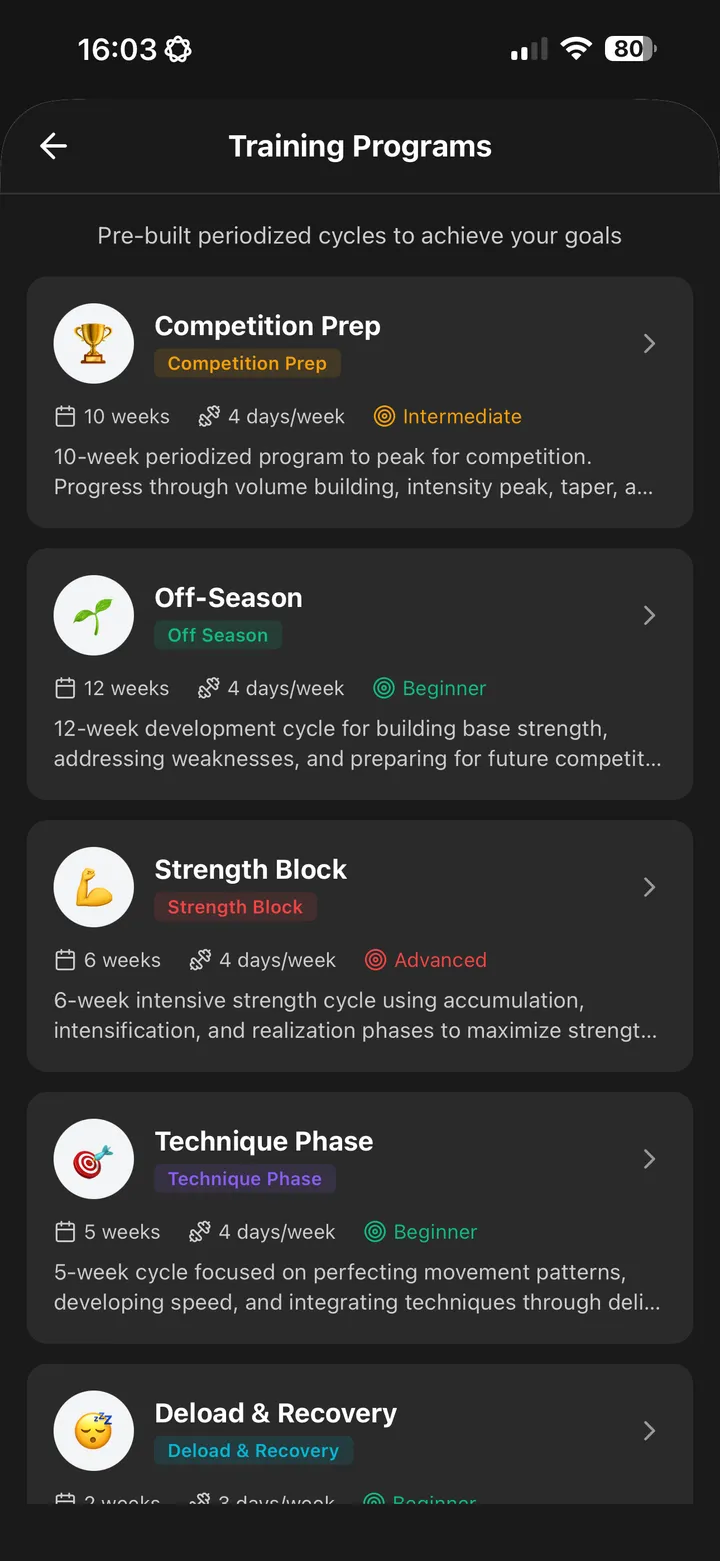
ArmProgress is built for exactly this kind of training — log your table and gym work, follow armwrestling-specific programs, and watch your numbers climb.
Frequently asked questions
How do I start training for armwrestling?
Begin with two sessions a week combining table practice (technique and sport-specific strength) with targeted gym work for the wrist, forearm, grip, pronators and side pressure. Ramp up slowly to protect your tendons.
What muscles matter most in armwrestling?
The wrist flexors (cupping), pronators, forearm and grip, biceps/brachialis, and the lats and delts for side and back pressure. Hand, wrist and forearm strength matter more than raw upper-body size.
Do I need a table to train armwrestling?
A table (or a partner/band setup) is ideal because sport-specific strength comes from the exact pulling angles, but you can build a lot of the supporting strength with gym work on wrists, forearms and pronation.
How often should a beginner armwrestle?
Start with about two sessions per week. Tendons adapt slower than muscles, so prioritize recovery and avoid maximal table pulls until you've built a base.
Train like an armwrestler
ArmProgress is the training tracker built for armwrestling — log table time and gym work, track left/right, watch your numbers climb, and get AI-powered insights.